จารึก
The Princess Maha Chakri Sirindhorn Anthropology Centre
คำอ่าน-แปล
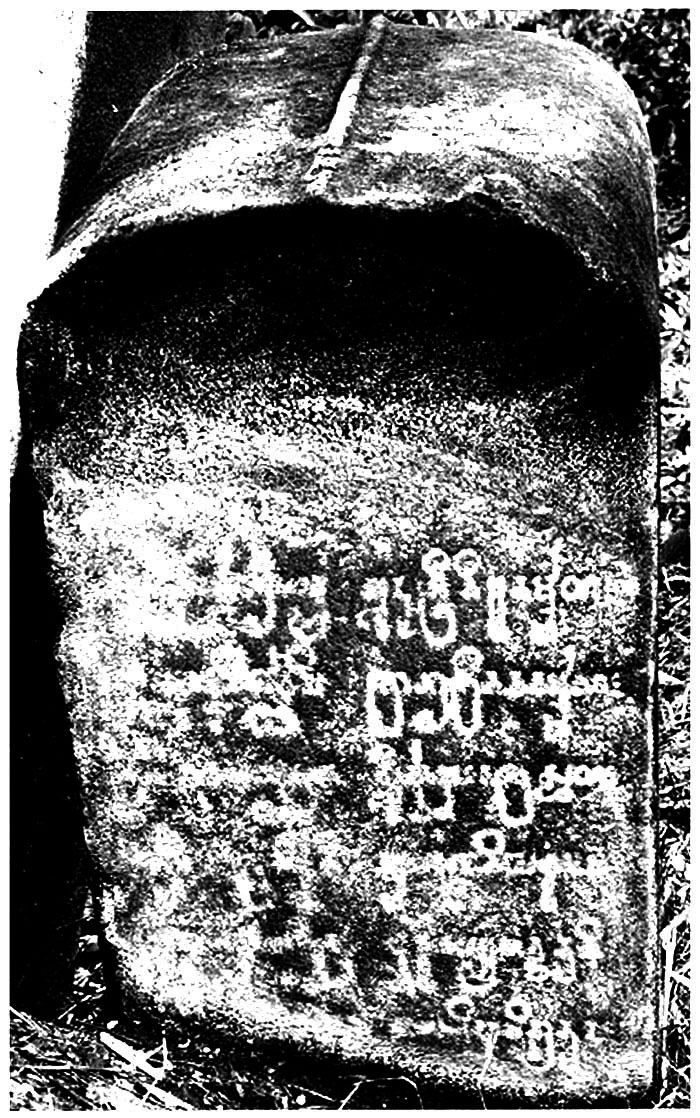

ด้านที่ 1 |
 |
ชุดคำค้น 13 คำ
อายุ-จารึกพุทธศตวรรษที่ 12, ยุคสมัย-จารึกอาณาจักรเจนละ, ยุคสมัย-จารึกอาณาจักรเจนละ-พระเจ้ามเหนทรวรมัน, วัตถุ-จารึกบนหิน, ลักษณะ-จารึกบนใบเสมา, ศาสนา-จารึกในศาสนาพราหมณ์-ฮินดู, ศาสนา-จารึกในศาสนาพราหมณ์-ฮินดู ลัทธิไศวนิกาย, เรื่อง-การสร้างรูปเคารพ, เรื่อง-การสร้างศิวลึงค์, บุคคล-กษัตริย์และผู้ครองอาณาจักรเจนละ, บุคคล-กษัตริย์และผู้ครองอาณาจักรเจนละ-พระเจ้ามเหนทรวรมัน, บุคคล-พระเจ้าจิตรเสน, บุคคล-พระเจ้ามเหนทรวรมัน,
ภาพจากการสำรวจภาคสนาม
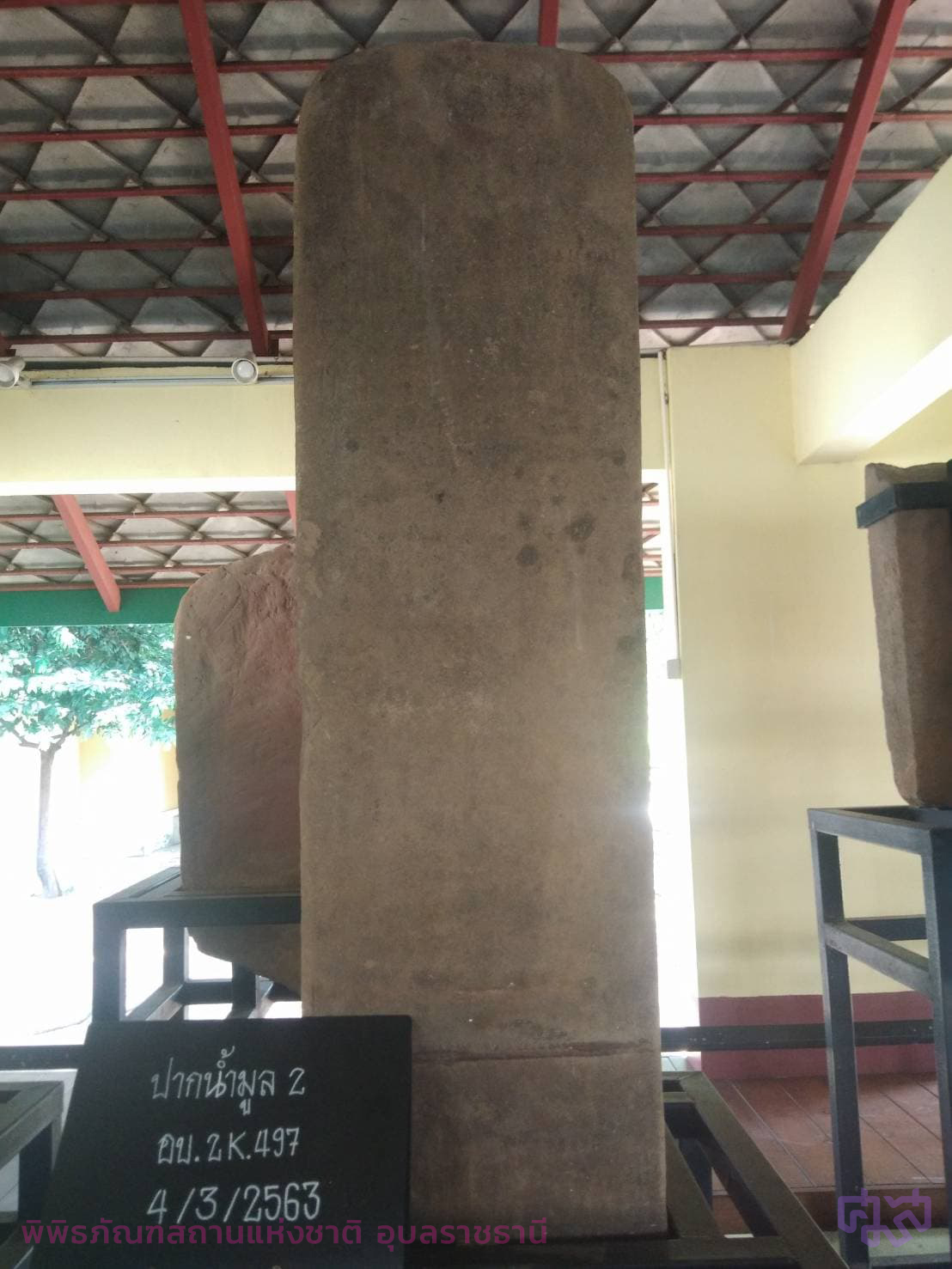
จารึกปากน้ำมูล 2
จารึก
จารึกปากน้ำมูล 2


 โพสต์เมื่อวันที่ 13 ก.พ. 2550 13:59:58 ( อัพเดทเมื่อวันที่ 12 พ.ย. 2568 16:25:35 )
ชื่อจารึก |
จารึกปากน้ำมูล 2 |
ชื่อจารึกแบบอื่นๆ |
อบ. 2, K. 497, เลขทะเบียนโบราณวัตถุที่ 6/2528, Les inscriptions de Khăn Thevăda, Les inscriptions de Khăn T’evăda, Khan Thevada Inscriptions, Les inscriptions de Khan T’evada (Pak Mun) (K. 496 & K. 497) |
อักษรที่มีในจารึก |
ปัลลวะ |
ศักราช |
พุทธศตวรรษ 12 |
ภาษา |
สันสกฤต |
ด้าน/บรรทัด |
จำนวนด้าน 1 ด้าน มี 6 บรรทัด |
วัตถุจารึก |
ศิลา |
ลักษณะวัตถุ |
รูปเสมาหรือทรงกลีบบัว |
ขนาดวัตถุ |
กว้าง 39 ซม. สูง 150 ซม. หนา 28.50 ซม. |
บัญชี/ทะเบียนวัตถุ |
1) กองหอสมุดแห่งชาติ กำหนดเป็น “อบ. 2” |
ปีที่พบจารึก |
ไม่ปรากฏหลักฐาน |
สถานที่พบ |
ฝั่งขวาปากน้ำมูล ตำบลโขงเจียม อำเภอโขงเจียม จังหวัดอุบลราชธานี |
ผู้พบ |
ไม่ปรากฏหลักฐาน |
ปัจจุบันอยู่ที่ |
พิพิธภัณฑสถานแห่งชาติ อุบลราชธานี ตำบลในเมือง อำเภอเมือง จังหวัดอุบลราชธานี (สำรวจข้อมูล 4 มกราคม 2563) |
พิมพ์เผยแพร่ |
1) Bulletin de l’École Française d’Éxtrême-Orient XXII (1922) : 57-60, pl. II. |
ประวัติ |
ในบรรดาจารึกอักษรปัลลวะ ที่พบในภาคอีสานของประเทศไทย มีจารึกกลุ่มหนึ่งจำนวน 7 หลัก ซึ่งเป็นของพระเจ้าศรีมเหนทรวรมัน มีรูปอักษรเหมือนกัน ข้อความเหมือนกัน ต่างกันเพียงข้อความที่กล่าวถึงสิ่งสร้างขึ้นเพื่อเคารพบูชาเท่านั้น กลุ่มจารึกดังกล่าวประกอบด้วย |
เนื้อหาโดยสังเขป |
ข้อความในจารึกกล่าวถึงพระเจ้าจิตรเสน กษัตริย์ผู้ยิ่งใหญ่ทรงได้ชัยชนะเหนือกัมพูประเทศ และได้เฉลิมพระนามว่า “ศรีมเหนทรวรมัน” อีกทั้งโปรดให้สร้างรูปเคารพต่างๆ ในลัทธิไศวนิกายไว้เพื่อเป็นเครื่องหมายแห่งชัยชนะของพระองค์ ซึ่งในจารึกปากน้ำมูล 2 นี้ เป็นการสร้างพระศิวลึงค์ ดังนั้น จากจารึกทั้ง 7 หลักนี้ จึงเป็นหลักฐานอย่างดีว่า อารยธรรมแถบลุ่มแม่น้ำชี และลุ่มแม่น้ำมูลในระหว่างพุทธศตวรรษที่ 11-12 นั้น มีผู้นำของอาณาจักรนับถือศาสนาพราหมณ์ ลัทธิไศวนิกาย “จิตรเสน” เป็นพระนามของเจ้าชายผู้ทรงเป็นพระญาติกับพระเจ้าภววรมันที่ 1 (พ.ศ. 1141-1150) กษัตริย์แห่งอาณาจักรเจนละ ต่อมาเจ้าชายจิตรเสนได้ครองราชสมบัติ ฉลองพระนามเป็น พระเจ้ามเหนทรวรมัน (ราว พ.ศ. 1150-1159) พระเจ้ามเหนทรวรมันทรงสถาปนาจารึกไว้เป็นจำนวนมาก โดยเฉพาะอย่างยิ่งในเขตแดนของประเทศไทยในปัจจุบันนั้น มีพบที่ จังหวัดบุรีรัมย์ คือ กลุ่มจารึกถ้ำเป็ดทอง ที่จังหวัดขอนแก่นพบจารึกวัดศรีเมืองแอม (ขก. 15) และที่จังหวัดอุบลราชธานี พบจารึกปากน้ำมูล 1 (อบ. 1) (K. 496) จารึกปากน้ำมูล 2 (อบ. 2) (K. 497) จารึกวัดสุปัฏนาราม 1 (อบ. 4) (K. 508) และ จารึกถ้ำภูหมาไน (อบ. 9) |
ผู้สร้าง |
ศรีมเหนทรวรมัน |
การกำหนดอายุ |
กำหนดอายุตามรูปแบบของตัวอักษรปัลลวะ ได้อายุราวพุทธศตวรรษที่ 12 นอกจากนี้ เนื้อความยังกล่าวถึงรัชสมัยของพระเจ้าศรีมเหนทรวรมัน ซึ่งครองราชย์อยู่ราว พ.ศ. 1150-1159 ดังนั้น จึงอาจกำหนดอายุได้ราวกลางพุทธศตวรรษที่ 12 ก็ได้เช่นกัน |
ข้อมูลอ้างอิง |
เรียบเรียงข้อมูลโดย : ตรงใจ หุตางกูร, โครงการฐานข้อมูลจารึกในประเทศไทย, ศมส., 2547, นวพรรณ ภัทรมูล, อัพเดตข้อมูล (2568) จาก : |
ภาพประกอบ |
1) ภาพถ่ายจารึกจาก : จารึกในประเทศไทย เล่ม 1 (กรุงเทพฯ : กรมศิลปากร, 2529) |